
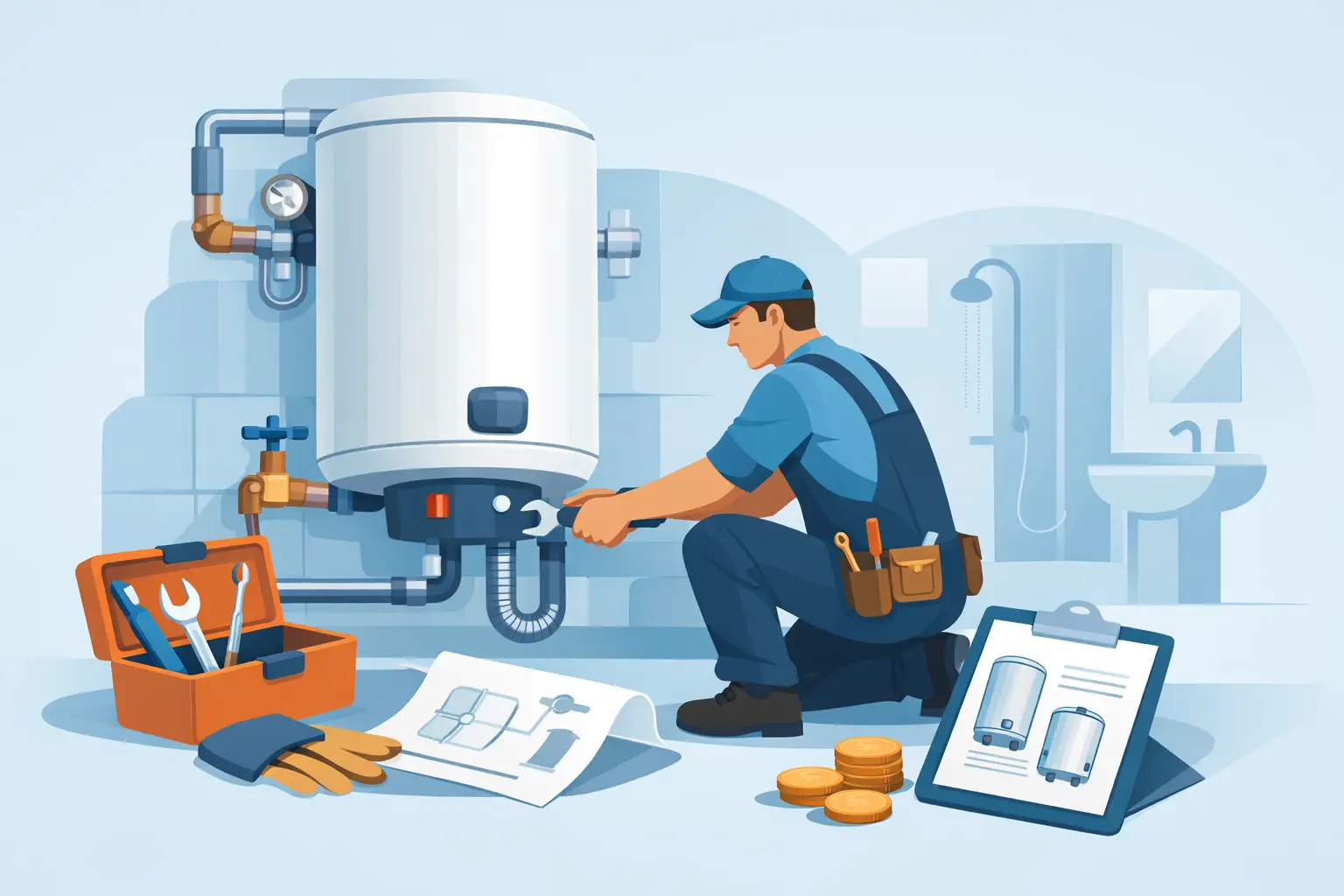
When a water heater fails, most people want one answer fast: what will the job cost to install? The tricky part is that water heater installation labor cost is not a flat number. It depends on the type of heater, the condition of the existing setup, code requirements, and how much work is needed to install the unit safely.
If you are comparing estimates, it helps to know what you are actually paying for. Labor is more than setting a tank in place and hooking up a few lines. A proper installation includes removal of the old unit, water and gas or electrical connections, venting checks, safety components, startup, testing, and making sure the system meets current standards.
What water heater installation labor cost usually includes
For a straightforward replacement, labor generally covers disconnecting and removing the old water heater, positioning the new one, making the plumbing connections, reconnecting gas or electrical service, checking venting, filling the tank, testing the system, and confirming safe operation.
That sounds simple on paper, but the details matter. If the installer finds old shut-off valves that no longer work, a damaged vent connector, undersized gas piping, or signs of leakage around the platform, the labor can go up because the scope has changed. A low initial estimate sometimes assumes a clean swap. Real-world jobs are not always that clean.
In many cases, labor may also include basic haul-away and cleanup. Some companies fold those costs into the installation price, while others separate them. That is one reason two quotes for the same heater can look different.
Typical labor ranges for water heater installation
A standard tank water heater replacement often has a lower labor cost than a tankless installation. For a basic like-for-like tank replacement with accessible connections, labor may fall in the few-hundred-dollar range. Once the job involves venting changes, gas line work, code upgrades, or a difficult location, labor can move significantly higher.
Tankless installations usually require more time and skill. They often involve mounting, new venting, gas sizing review, condensate management for condensing models, and more detailed setup. Because of that, labor for tankless units is commonly much higher than for conventional tank replacements.
Electric-to-gas or gas-to-electric conversions are a different category altogether. Those jobs usually require new utility connections or upgrades, so the labor cost rises because the installation is no longer a simple replacement.
Why one home gets a lower quote than another
The biggest factor is whether the installer is replacing the same type of unit in the same location with compatible existing connections. If yes, labor tends to stay lower. If not, there is more time, more coordination, and more material handling involved.
Age of the home matters too. Older plumbing systems can introduce issues that are not visible until work begins. Corroded piping, outdated valves, improper venting, and older gas connections can all add labor. In some homes, bringing the installation up to current code is where much of the labor cost comes from.
Access is another major variable. A garage installation with open space is usually easier than a unit in a tight attic, crawl space, closet, or commercial mechanical room. Moving heavy equipment through narrow hallways or stairs takes more time and often more than one technician.
Tank vs. tankless labor cost
Standard tank water heaters
Tank water heaters are generally faster to replace, especially when the new unit matches the old fuel type, size, and venting style. If the water, gas, or electrical connections line up closely and the pan, seismic strapping, and shut-offs are already in good shape, labor is more predictable.
That does not mean every tank installation is cheap. Atmospheric vent models may still need vent corrections. Expansion tanks, drain pans, earthquake strapping, and drip leg updates may be needed depending on the setup. Those are not extras for show. They are part of a safe and reliable installation.
Tankless water heaters
Tankless systems can save space and improve hot water performance, but installation is usually more involved. The labor often includes wall mounting, updated venting, gas line evaluation, combustion air review, and detailed startup settings. Some homes also need larger gas piping to support the burner.
For that reason, when people compare a tankless estimate to a tank replacement, the labor difference can seem dramatic. It is not just a different appliance. It is often a different installation process with more technical steps.
Hidden factors that raise labor costs
A quote can change when the installer uncovers issues that could not be confirmed before the old heater was removed. This is common and not always a red flag. Some conditions only become obvious once the area is opened up.
The most common labor add-ons include:
- Replacing failed shut-off valves
- Updating venting or flue connections
- Adjusting water lines to fit a new unit size
- Installing or replacing a drain pan
- Adding an expansion tank
- Correcting gas line or sediment trap issues
- Upgrading earthquake straps where required
- Repairing minor water damage around the installation area
That is why the cheapest quote is not always the best value. If one contractor is pricing a bare-minimum swap and another is pricing a safe, code-conscious installation, the numbers will not match.
Labor cost in emergency vs. scheduled installation
If you are calling because the heater failed overnight or leaked into the garage, timing can affect labor cost. Emergency service, after-hours response, weekend scheduling, and same-day replacement can carry a premium. That does not mean the pricing is unfair. It reflects the cost of dispatching qualified technicians quickly when the need is urgent.
Scheduled installations are usually easier to price and plan. If your current unit is aging but still operating, replacing it before failure may give you more options and help you avoid premium emergency labor. For homeowners and property managers, that can be the difference between a controlled project and a costly disruption.
Residential and commercial jobs are priced differently
For business owners and property managers, water heater installation labor cost often reflects more than the unit itself. Commercial systems may involve larger capacities, stricter operational demands, limited downtime windows, and more complicated mechanical layouts.
A restaurant, office, multifamily property, or retail space may need installation work done without interrupting business for long. That can require extra planning, additional crew support, or phased work. Commercial labor pricing is often higher because the risk and complexity are higher.
How to read a quote without getting lost
A good estimate should make it clear whether labor includes removal, haul-away, basic connection work, startup, and code-related items that are known at the time of inspection. If the quote is vague, ask what assumptions were made.
You also want to know what is not included. If venting upgrades, gas modifications, permit-related work, or access challenges are excluded, that should be stated clearly. Transparent pricing is not always the lowest number upfront, but it helps prevent surprises once the work starts.
For homeowners in Reno and Sparks, local experience matters here. Regional code expectations, fuel setups, and home layouts can affect labor time in ways that out-of-area pricing guides do not always capture.
When paying more for labor makes sense
There is a difference between high labor cost and justified labor cost. If the installer is licensed, experienced, responsive, and focused on safe operation, you are paying for more than installation speed. You are paying for the job to be done correctly the first time.
That matters with water heaters because mistakes can lead to leaks, poor performance, venting hazards, gas issues, or shortened equipment life. A low-cost install that skips necessary corrections may become more expensive later.
Reno Sparks Water Heaters has seen this firsthand on replacement jobs where a previous installation cut corners and left behind venting, gas, or safety problems. In those cases, labor is not just about putting in a new unit. It is about correcting what should have been handled properly from the start.
The best next step before you budget
If you are trying to estimate water heater installation labor cost, start by identifying whether you need a basic replacement or a more involved installation. The age of the home, type of heater, fuel source, access, and code condition around the existing unit all affect the answer.
The most useful quote comes from an on-site evaluation by a qualified installer who can see the venting, piping, shut-offs, drainage, and location firsthand. That is how you get a number that reflects the real job, not just the appliance.
A water heater is one of those systems that you only think about when it stops doing its job. When it is time to replace it, clear pricing and careful labor matter just as much as the unit you choose.
Leave a Reply