
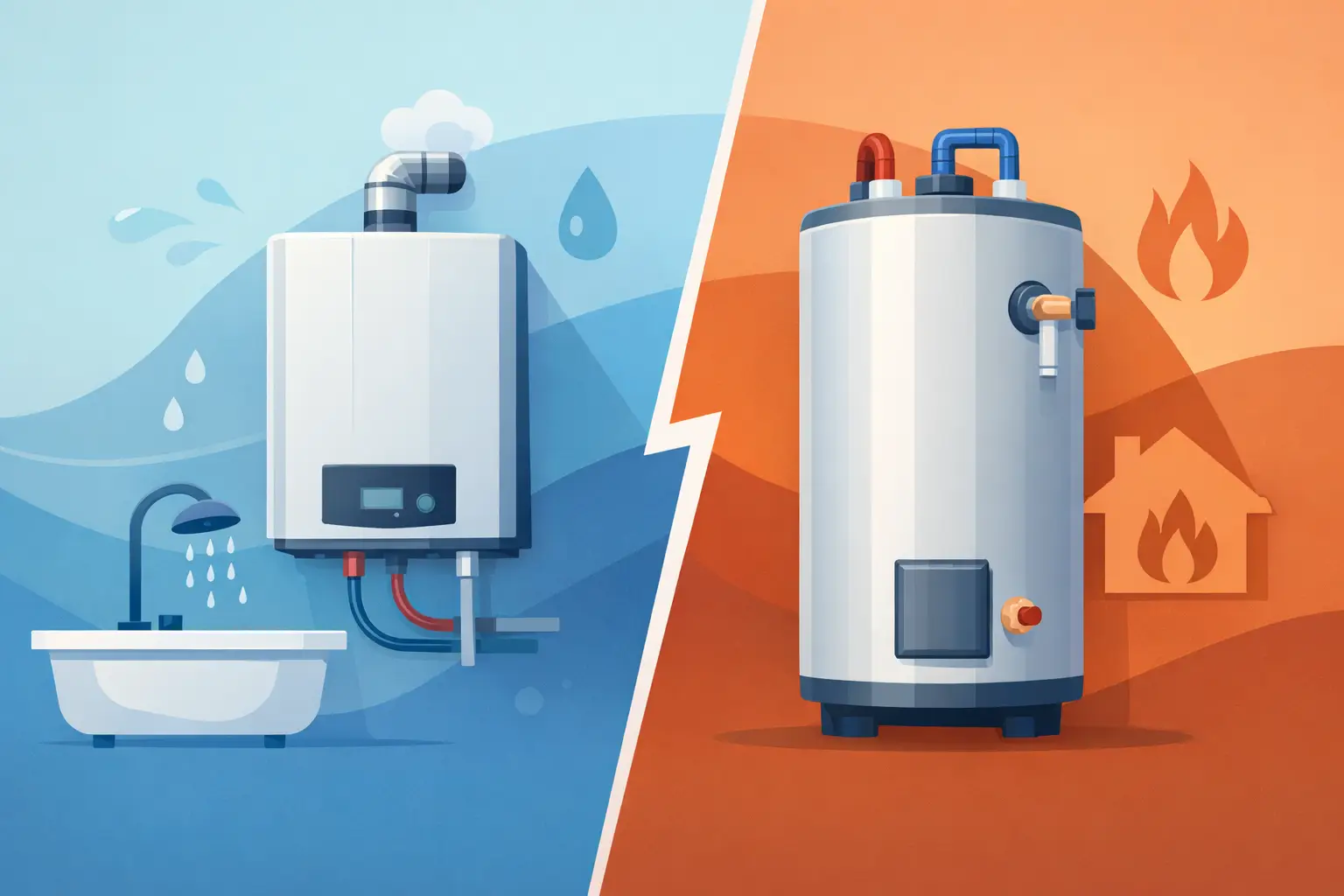
The wrong water heater usually gets noticed at the worst possible time – during a morning rush, between tenant turnovers, or right before opening a business for the day. When people ask about tankless versus tank water heaters, they are usually trying to solve a practical problem: lower energy bills, more reliable hot water, less maintenance, or all three.
The right choice depends on how your property uses hot water, what fuel source is available, and how much you want to spend upfront versus over time. Both systems can work well. The difference is in how they deliver hot water and what that means for performance, installation, and long-term value.
Tankless versus tank water heaters: the core difference
A traditional tank water heater stores a set amount of heated water, usually 30 to 80 gallons. It keeps that water hot throughout the day, so when you turn on a faucet, hot water is ready to go. That simple design is one reason tank models remain common in homes, apartments, and commercial spaces.
A tankless water heater does not store hot water. It heats water as it passes through the unit. When a fixture calls for hot water, the system activates and heats the water on demand. That can reduce standby energy loss, but it also means the unit has to be sized correctly for the number of fixtures that may be running at once.
On paper, tankless often looks like the easy winner because of energy efficiency. In actual use, the better option depends on demand patterns and installation conditions.
Upfront cost versus long-term cost
For most property owners, the first big difference is price. Tank water heaters usually cost less to purchase and install. If you are replacing an older tank unit with a similar model, installation is often more straightforward. That matters when a system fails unexpectedly and the goal is to restore hot water fast.
Tankless systems usually have a higher initial cost. The unit itself costs more, and installation can involve upgrades to gas lines, venting, or electrical service. If a property was not originally set up for tankless equipment, those added requirements can change the total project cost significantly.
That said, tankless units can make up some of that cost over time through lower energy use and longer service life. The savings are not identical for every property. A household with moderate hot water use may see a different return than a restaurant, salon, or multi-bath home with heavier demand.
If your priority is the lowest upfront expense, tank often wins. If your priority is lower operating cost over a longer horizon, tankless deserves a closer look.
Performance: how much hot water do you actually need?
This is where many comparisons get too simplistic. People hear that tankless gives you endless hot water, and that is true in one sense. As long as the unit can keep up with demand, it can continue heating water without running out like a tank can.
But capacity still matters. A tankless unit is rated by flow rate. If too many showers, sinks, or appliances are calling for hot water at the same time, the system may struggle to keep temperature consistent. In a larger home or commercial setting, that may require multiple units or a carefully designed setup.
A tank water heater can better handle short bursts of high demand because it already has a volume of hot water stored. If several people shower back to back, or if a property has a concentrated period of use, a properly sized tank may perform very well. The trade-off is that once the stored hot water is depleted, recovery takes time.
For a smaller household with staggered use, tankless can be an excellent fit. For properties with heavy simultaneous demand, the answer depends on sizing, layout, and usage habits.
Tankless versus tank water heaters in real-world efficiency
Tankless systems are generally more efficient because they heat water only when needed. They do not spend all day maintaining the temperature of stored water. That makes them appealing to owners who want to reduce wasted energy.
Tank systems lose some energy through standby heat loss. Even with insulation and improved design, the unit still works to keep water hot inside the tank. Over time, that can add to utility costs.
Still, efficiency should not be viewed in isolation. If a tankless installation requires major gas or electrical upgrades, the payback period may be longer than expected. If a tank unit is installed in a property where hot water demand is steady and predictable, its performance may still be cost-effective.
This is especially true in older buildings, where existing infrastructure can influence what makes sense. The best decision is rarely just about the brochure rating. It is about the total system.
Lifespan and maintenance
Tankless water heaters often last longer than tank units. A well-maintained tankless system may provide service for 20 years or more. Traditional tank water heaters usually have a shorter lifespan, often around 8 to 12 years, depending on water quality, maintenance, and usage.
That longer lifespan is one reason some owners accept the higher installation cost of tankless. But maintenance matters. Tankless units should be serviced regularly, especially in areas where mineral buildup can affect performance. Descaling and inspection help protect efficiency and prevent avoidable issues.
Tank water heaters also need maintenance, including flushing sediment and checking components. When maintenance is skipped, both types can lose efficiency and fail earlier. The difference is that tank units are more vulnerable to internal tank corrosion over time, and once the tank itself fails, replacement is usually the next step.
For owners who plan to stay in a property long term, the lifespan advantage of tankless can be meaningful. For rental properties or tight budgets, a standard tank may still be the more practical move.
Space, layout, and installation limitations
A tankless unit takes up less space than a traditional tank. That can be useful in smaller utility areas, closets, and commercial spaces where square footage matters. Wall-mounted designs also make access easier in some installations.
A tank water heater requires more floor space, but that does not automatically make it the wrong choice. In many garages, mechanical rooms, and service areas, space is available and the simpler replacement path is attractive.
Installation details often decide the issue. Gas-fired tankless units may require larger gas lines and specific venting. Electric tankless models may place heavy demands on the electrical system. Tank units are often easier to replace within an existing setup, particularly when speed and budget matter.
That is why a site-specific evaluation matters more than assumptions. What works well in one home may not be the best answer in another building right down the street.
Which option makes more sense for homeowners and businesses?
For many homeowners, tankless is attractive when they want energy savings, a longer-lasting system, and consistent hot water for daily use. It is especially appealing when a remodel, new construction project, or infrastructure upgrade is already underway.
Tank water heaters remain a strong option for homeowners who want dependable performance, lower upfront cost, and a simpler replacement process. If the existing system has worked well for years, staying with a tank may be the most practical choice.
For property managers, the decision often comes down to balancing replacement cost, tenant expectations, and maintenance planning. A standard tank may be easier to replace quickly after a failure. A tankless system may offer better long-term value in the right building, but only if demand and installation conditions support it.
For businesses, downtime and demand patterns matter most. Some commercial properties benefit from tankless systems because of efficiency and continuous hot water. Others need storage-based systems or hybrid approaches to handle peak usage reliably. In these situations, proper sizing is more important than choosing a trend.
The better choice depends on the job
There is no one-size-fits-all winner in tankless versus tank water heaters. Tankless can offer efficiency, space savings, and longer service life. Tank models can offer lower upfront cost, simpler installation, and solid performance for many properties.
The smart move is to match the equipment to the building, the usage pattern, and the available utilities. In Reno and Sparks, where homes and commercial buildings vary widely in age and layout, that matters even more. A dependable installer will look at the whole picture before recommending a system.
If you are replacing a failed unit or planning an upgrade, focus less on which type sounds better and more on which one will keep your hot water dependable day after day. That is the choice that usually pays off.
Leave a Reply