
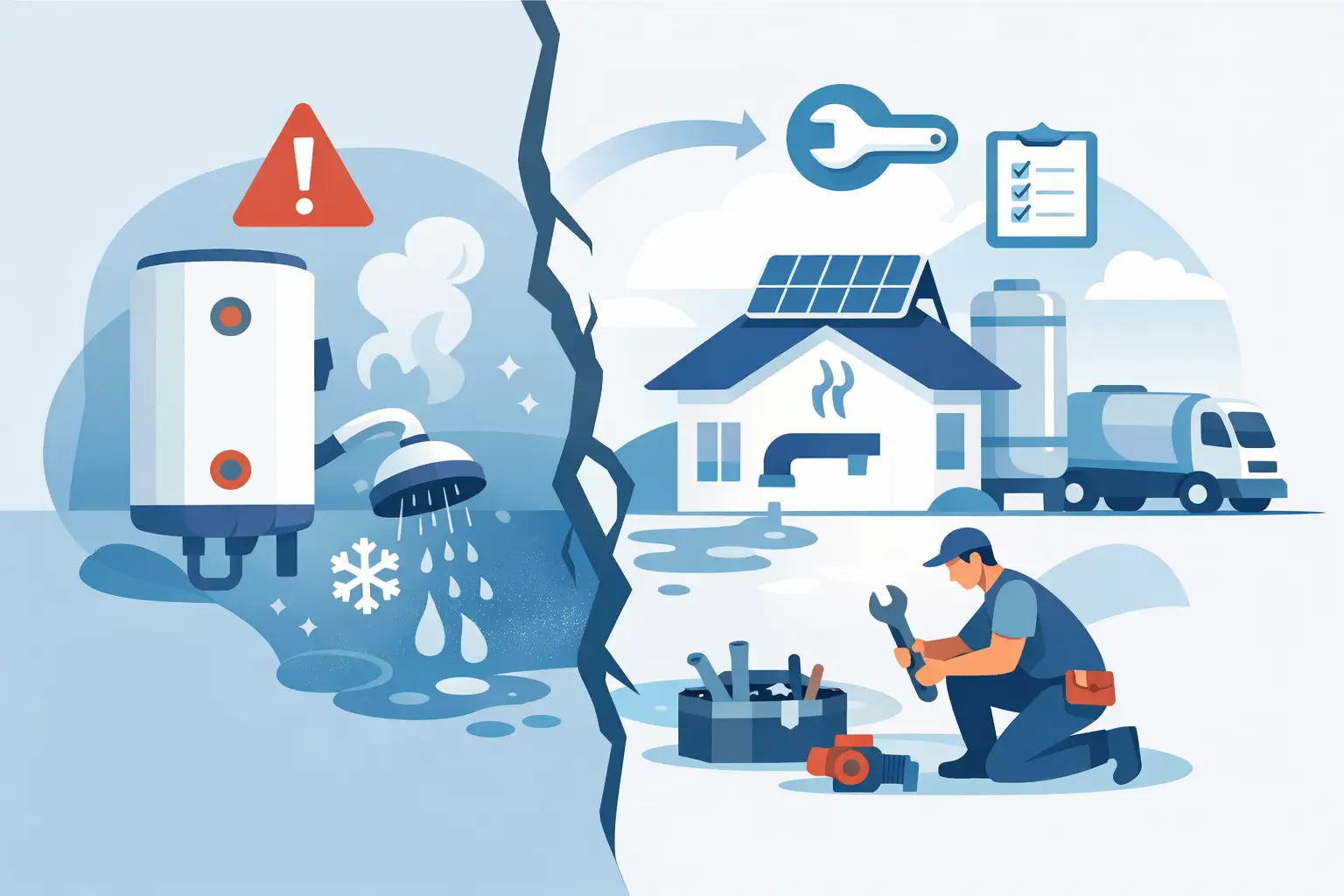
A cold shower usually tells you the problem before you ever see the water heater. When hot water stops without warning, most people need emergency hot water loss solutions that are safe, fast, and practical – not guesswork that makes the problem worse.
Hot water loss can come from a failed water heater, a gas supply issue, an electrical problem, a leaking tank, a tripped safety control, or demand that suddenly exceeds what the system can produce. The right response depends on what failed and whether the unit is still safe to leave on. Some situations are inconvenient. Others need immediate service.
Emergency hot water loss solutions start with safety
If you notice leaking around the tank, a burning smell, popping sounds that have suddenly become louder, discoloration around gas components, or water where it should not be, start by treating the issue as a safety concern. A water heater is not just another appliance. It involves heat, pressure, water, and in many homes, gas or high-voltage electrical connections.
For a gas water heater, if you smell gas, leave the area and follow normal gas safety steps before calling for help. Do not try to relight the unit or test components yourself. If the tank is actively leaking, turn off the water supply to the heater if you can do so safely. If you know where the power shutoff or gas shutoff is and the situation is clearly unsafe, turning the unit off can prevent added damage.
If there is no leak, no gas odor, and no sign of an electrical problem, you may be dealing with a service issue rather than an immediate hazard. That matters, because it changes what you should check first.
What to check before you assume the heater failed
A surprising number of no-hot-water calls come down to one interrupted setting, one tripped breaker, or one pilot issue. That does not mean every problem is simple, but it does mean a quick look can save time.
Start with the basics. Confirm that the problem is truly whole-house hot water loss and not one fixture. If one sink has no hot water but the rest of the building does, the issue may be local to that faucet or mixing valve. If every shower and faucet runs cold, the water heater or its fuel source is the likely cause.
For an electric water heater, check the breaker panel for a tripped breaker. Resetting it once may restore service if the trip was isolated. If it trips again, stop there. Repeated tripping points to a heating element, thermostat, wiring, or another electrical fault that needs professional diagnosis.
For a gas unit, check whether the pilot is out if your model has one and if the manufacturer instructions are clear and accessible. If the pilot will not stay lit, or if the burner never fires, there may be an issue with the thermocouple, gas control valve, venting, or gas supply. Those are not good places for trial-and-error repairs.
Also consider recent usage. If multiple showers, laundry, and dishwashing happened back to back, you may have temporary depletion rather than failure. In that case, the unit may simply need recovery time. Traditional tank heaters can only reheat so much water at once.
When no hot water points to a bigger problem
Some failures are obvious. Others show up as partial performance before complete hot water loss. If your water has been getting lukewarm for days, if the heater has been making rumbling noises, or if rusty water started showing up before the outage, the system may have been warning you.
Sediment buildup is a common cause of declining performance, especially in older tank units. As minerals settle in the bottom of the tank, the heater has to work harder to heat water through that layer. Recovery slows down. Efficiency drops. Over time, overheating and tank damage can follow.
Age matters too. If the unit is well into its expected service life and suddenly stops producing hot water, repair is not always the best answer. A minor component failure on an otherwise solid heater can be worth fixing. A major issue on an aging tank with corrosion, leakage, or repeated service history often points toward replacement.
Commercial properties and larger households face another issue: sizing. Sometimes the heater is functioning, but it no longer matches the building’s demand. What looks like failure may really be undersized capacity, poor recovery, or a system layout problem.
Emergency hot water loss solutions by heater type
The solution depends heavily on the kind of system you have.
Tank water heaters
With a standard tank unit, the most common emergency causes are failed heating elements, bad thermostats, pilot or burner problems, gas control issues, and tank leaks. If the tank itself is leaking from the body and not from a connection, replacement is usually the practical path. Tanks do not get structurally better with patchwork.
If the issue is a control component or heating element, same-day repair may be possible if the heater is otherwise in good condition. That is often the most cost-effective option for a relatively newer unit.
Tankless water heaters
Tankless systems can lose hot water because of ignition failure, scale buildup, venting problems, sensor faults, gas supply interruption, or flow-related issues. These units are efficient, but they are less forgiving of installation errors, maintenance neglect, and component-specific problems. Error codes can help narrow the issue, but they do not replace proper diagnosis.
A tankless unit may also appear to fail when the problem is actually tied to inlet filtering, descaling needs, or inconsistent gas pressure. Those are technical issues that should be addressed correctly the first time.
Gas versus electric systems
Gas water heaters often fail in ways tied to ignition, combustion, venting, and control valves. Electric units tend to fail at breakers, thermostats, and elements. The difference matters because the repair path, parts, and safety procedures are not the same. It is one reason specialized service is more valuable than generic troubleshooting when the hot water is out.
Repair or replace – what makes sense in an emergency
When you are standing in a building with no hot water, the fastest option can feel like the best one. Sometimes it is. Sometimes it costs more in the long run.
Repair usually makes sense when the heater is relatively newer, the problem is isolated to a serviceable part, and the tank itself is still sound. Replacement becomes the better decision when the unit is older, leaking, repeatedly failing, or no longer meeting demand even when repaired.
There is also a timing issue. If a critical part is backordered, replacement may restore service faster than waiting. For a business, apartment unit, or busy household, downtime has real cost. Reliable hot water is not optional for long.
That is why experienced technicians look at the full picture – age, condition, safety, capacity, and urgency – rather than pushing one answer every time.
How to reduce damage while you wait for service
If the system has stopped heating but is not leaking, your main goal is to avoid turning a service call into a property damage claim. Do not keep resetting controls, forcing restarts, or adjusting gas components if the cause is unknown. Repeated attempts can complicate diagnosis and increase risk.
If you see active leaking, shut off the water supply to the heater if possible. Move nearby stored items away from the area. For electric units, avoid standing water near electrical components. For gas units, avoid any action that could create ignition if gas is suspected.
If the building depends heavily on hot water, let occupants know early. In a commercial setting, that means adjusting operations before the outage causes a bigger disruption. In a home, it may mean spacing out basic needs until service arrives.
Why local response matters in a hot water emergency
Emergency water heater problems are rarely improved by delay. The longer a leaking tank sits, the greater the chance of floor damage, wall damage, and cleanup costs. The longer a business runs without hot water, the more likely it is to affect staff, tenants, or customers.
That is where a contractor with actual emergency availability matters. Fast diagnosis is not just about convenience. It helps determine whether the situation is safe, whether repair is realistic, and whether replacement should happen right away. In Reno and Sparks, where homes and commercial properties rely on dependable plumbing infrastructure year-round, that speed can make a meaningful difference.
Reno Sparks Water Heaters has built its service around that reality. When hot water fails, people do not want vague answers. They want a clear diagnosis, a safe recommendation, and a solution that gets the property back to normal.
The right fix is the one that restores reliability
Emergency hot water loss solutions are not one-size-fits-all. A tripped breaker, failed element, bad gas control, scaled tankless unit, undersized system, or leaking tank can all produce the same result at the tap. The difference is what happens next.
A good response is calm, safe, and specific to the actual problem. If the issue is minor, fix it properly. If the heater is at the end of the line, replace it before it creates more damage or more downtime. When hot water disappears, the goal is not a temporary patch. It is getting back to dependable service with confidence.
Leave a Reply