
A pipe does not wait for business hours. Neither does a failed water heater, a backed-up drain, or a gas-related plumbing issue that forces you to act fast. That is why an emergency plumbing preparedness guide matters before anything goes wrong. The goal is simple – limit damage, protect people, and make the right call quickly when a plumbing failure disrupts your home or business.
Most plumbing emergencies get worse in the first few minutes. Water spreads, flooring absorbs it, drywall softens, and operations can stop altogether. In a commercial setting, even a small leak can affect customers, staff, inventory, or tenant satisfaction. At home, the stress comes just as fast, especially if hot water is lost or a leak starts near living spaces.
Preparedness does not mean you need to become a plumber. It means knowing where your shutoffs are, understanding what is actually urgent, and having a practical plan that works when people are tired, busy, or under pressure.
What counts as a plumbing emergency?
Not every plumbing problem is an emergency, but some situations should be treated that way immediately. Active leaks that cannot be contained, burst pipes, sewer backups, failed water heaters, overflowing toilets, and suspected gas line issues all deserve urgent attention. These problems can damage property, interrupt essential use, and create safety concerns.
Other issues fall into a gray area. A slow drain in one sink may be inconvenient, but it may not require an after-hours response. On the other hand, a drain problem in a restaurant kitchen, a multi-unit property, or the only bathroom in a house can become urgent quickly. That is where context matters. The same symptom can have very different consequences depending on the building and the people using it.
A good rule is to ask three questions. Is water actively causing damage? Has the plumbing failure made the property unsafe or unusable? Is there any chance of a gas-related hazard? If the answer is yes to any of those, treat it as an emergency.
The first five minutes in an emergency plumbing preparedness guide
The first response should be calm and direct. Shut off the water source if you can do it safely. If the issue is isolated to one fixture or appliance, the local shutoff may be enough. If not, use the main water shutoff for the building. Every homeowner, property manager, and facility lead should know exactly where that valve is located before there is a problem.
Next, shut off power to affected electrical areas if water is near outlets, equipment, or appliances. Do not step into standing water if electrical risk is present. If the emergency involves a water heater, know that the proper shutdown depends on whether the unit is gas or electric. With gas equipment, avoid improvising if you smell gas or suspect a line problem. Leave the area and call for qualified help.
After the immediate hazard is controlled, move what you can away from the affected area. Towels, buckets, and a wet vacuum can help reduce damage, but temporary cleanup is not the same as solving the problem. If a pipe has failed, a drain is backing up, or a heater has quit unexpectedly, professional service is still the next step.
Know your shutoffs before you need them
One of the most practical parts of emergency readiness is simply labeling key shutoffs. That includes the main water shutoff, fixture shutoffs under sinks and behind toilets, and the shutoff serving the water heater if accessible. In commercial buildings, this may also include zone shutoffs or equipment-specific valves.
This sounds basic because it is, but many emergency calls begin with a property owner or employee trying to figure out which valve controls what. That delay costs time and often increases damage. If you manage multiple units or a business location, make shutoff identification part of routine maintenance instead of relying on memory.
Water heaters deserve special attention here. When they fail, they can create both water damage and loss of service. If your household or building depends on consistent hot water, a failed unit is not just a comfort issue. It can affect sanitation, occupancy, and daily operations.
Build a realistic emergency kit
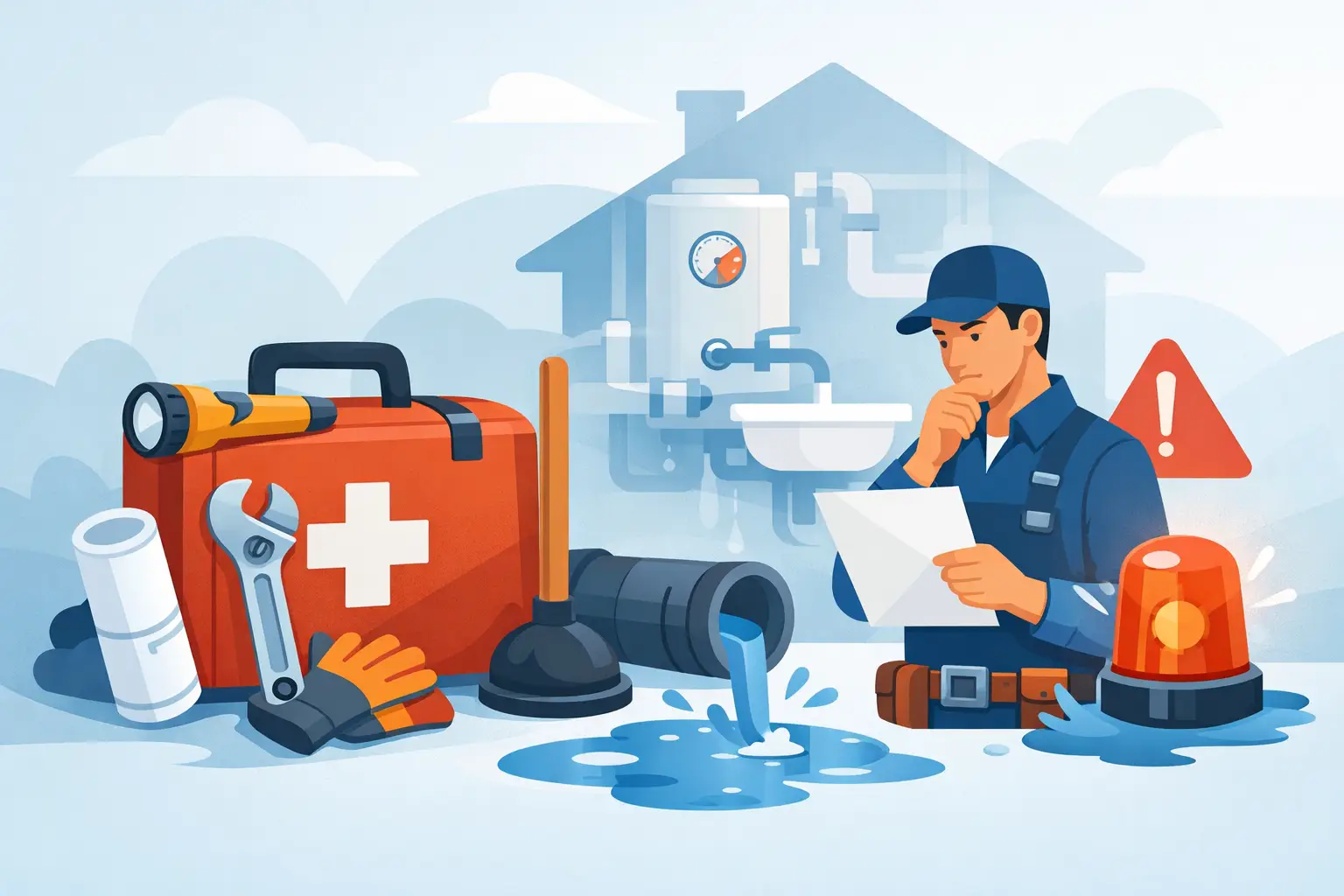
An emergency plumbing kit does not need to be complicated. It needs to be useful. Keep absorbent towels, a bucket, a flashlight, batteries, a wet vacuum if available, gloves, and basic shutoff tools in an easy-to-reach location. For commercial properties, place supplies where staff can access them without searching through storage rooms.
It also helps to keep a simple information sheet nearby. Include the location of shutoffs, the make and age of the water heater if known, and the contact information for your plumbing service provider. In an emergency, people lose time looking for details they could have written down months earlier.
There is a trade-off here. Some property owners try to stock repair materials for every possible issue. That usually leads to clutter and overconfidence. Preparedness is not about doing major repairs yourself. It is about controlling the situation until qualified help arrives.
Water heater failures need their own plan
A water heater problem often develops with warning signs first. You may notice inconsistent hot water, strange noises, rust-colored water, moisture around the tank, or a pilot issue on a gas unit. Ignoring those signs is one of the fastest ways to turn a manageable repair or replacement into an emergency call.
If the tank is leaking from the body itself, that usually points to internal failure rather than a simple connection issue. In that case, shut off the water supply to the unit and arrange service immediately. If you suspect a gas issue, do not experiment with relighting or adjusting components unless you are trained to do so safely.
For businesses, water heater preparedness should include backup planning. A restaurant, salon, apartment property, or service facility may not be able to function normally without dependable hot water. Waiting until the unit fails completely is risky when customer service, sanitation, or tenant expectations are on the line.
An emergency plumbing preparedness guide for homes and businesses
The basics are similar, but the stakes are not always the same. In a house, the focus is usually protecting the structure and restoring normal use. In a commercial setting, the response also has to account for staff communication, public safety, tenant needs, downtime, and liability.
That means business owners and property managers should assign responsibility ahead of time. Who can authorize service? Who has access to utility rooms? Who knows where the shutoffs are? If your answer is one person only, that is a weak point. Emergencies rarely happen at a convenient time.
For multi-unit or commercial properties, it is also worth reviewing whether older plumbing systems, aging water heaters, or recurring drain issues are creating repeat risk. Preparedness is not only about reaction. It is also about reducing the chance of the same emergency happening again next month.
What to do now, before something fails
The most effective preparation is scheduled attention. Inspect visible plumbing for corrosion, moisture, staining, or active drips. Test shutoff valves so you know they can move when needed. Pay attention to changes in water pressure, drain speed, and hot water performance. Small changes often show up before major failures do.
If your water heater is older, ask whether replacement makes more sense than waiting. Repairs can be appropriate, but age, condition, and reliability all matter. The cheapest short-term decision is not always the most dependable one, especially when a breakdown could damage floors or interrupt business.
For local property owners who want a dependable response plan, working with an experienced contractor before an emergency happens is usually the smarter move. Companies like Reno Sparks Water Heaters build that trust by focusing on essential systems that cannot afford guesswork, especially water heaters, gas-related installations, and plumbing support where uptime matters.
Preparedness does not remove every plumbing emergency. What it does is shorten the time between problem and control. When you know your shutoffs, understand the warning signs, and have a clear plan for service, you are in a far better position to protect your property, your routine, and the people who depend on both.
The best time to prepare for a plumbing emergency is when everything still seems fine.
Leave a Reply