
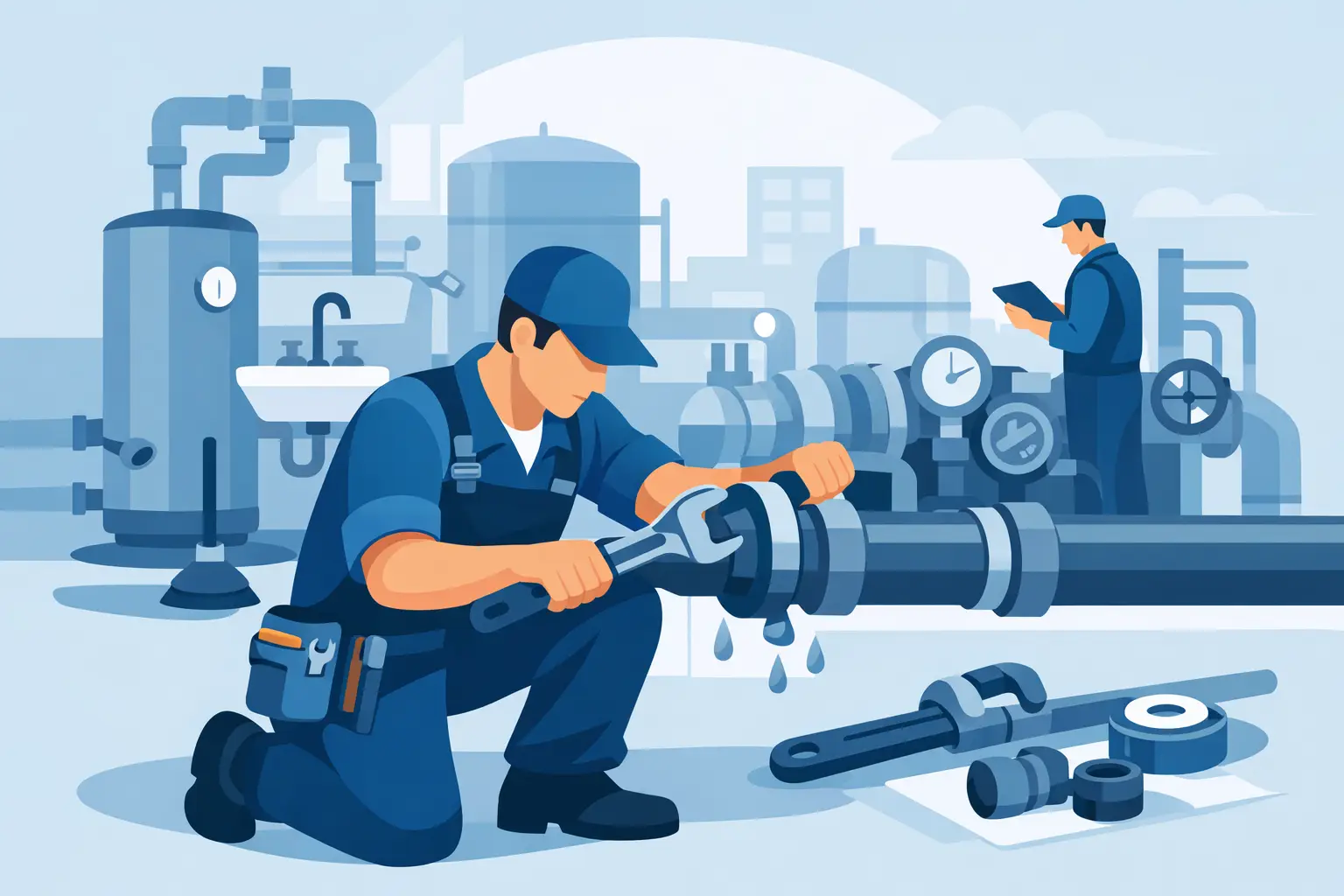
A backed-up restroom at 8 a.m. can throw off an entire business day. So can a failed water heater in a restaurant, a hidden leak behind a tenant wall, or a clogged floor drain in a service area. A solid commercial plumbing maintenance guide helps business owners and property managers stay ahead of those problems instead of reacting when operations are already under pressure.
Commercial plumbing does not fail all at once. Most of the time, it gives warning signs first – slow drains, pressure changes, longer hot water recovery times, unusual odors, or water stains that seem minor until they are not. The real value of maintenance is not just preventing emergencies. It is protecting uptime, avoiding health and safety issues, and extending the life of equipment that is expensive to replace.
Why commercial plumbing maintenance matters
In a commercial property, plumbing systems work harder than they do in most homes. Restrooms see heavier daily use. Water heaters cycle more often. Fixtures are used by employees, customers, tenants, and service staff, which means wear builds faster and failures have wider impact.
The cost of neglect usually shows up in the wrong places. It can mean emergency repair rates, property damage, tenant complaints, temporary closures, or failed inspections. For some businesses, especially food service, hospitality, medical, and multi-tenant buildings, a plumbing issue can quickly become an operations issue.
Maintenance also helps with budgeting. Planned service gives you a clearer picture of what needs repair now, what can wait, and what should be replaced before it fails. That is a much better position than making decisions in the middle of an emergency.
Commercial plumbing maintenance guide for key systems
A useful maintenance plan starts with the systems most likely to interrupt business if they fail. Not every building has the same setup, but most commercial properties should pay close attention to water supply lines, drains, water heating equipment, gas-connected appliances, fixtures, and shutoff points.
Water supply lines and pressure control
Small leaks in commercial buildings are easy to miss, especially in mechanical rooms, utility chases, storage areas, and vacant tenant spaces. Over time, even a minor leak can damage walls, flooring, and equipment. Corrosion around fittings, unexplained moisture, and a steady increase in water bills are all signs that deserve attention.
Pressure matters too. If water pressure is too low, restrooms and sinks may not perform well during busy hours. If it is too high, pipes, valves, and appliances take extra stress. Pressure regulators should be checked periodically, especially in older buildings or properties that have added equipment over time.
Drains, cleanouts, and sewer lines
Drain issues are among the most common commercial plumbing problems because they build gradually. Grease, soap, food debris, paper products, and sediment can restrict flow long before a full backup happens. Floor drains are another trouble spot, especially in utility rooms, kitchens, and service bays where debris collects without much notice.
Routine drain cleaning is often worth it in commercial settings, but the schedule depends on use. A restaurant may need much more frequent service than an office building. A retail space with public restrooms has different demands than a warehouse with limited fixture use. The right interval depends on actual traffic and the type of waste going down the system.
Sewer lines also deserve attention if a property has recurring backups, slow drains in multiple areas, or older piping. Those are signs that the problem may be larger than a single clogged fixture.
Commercial water heaters
Water heaters are often ignored until recovery slows or hot water stops altogether. That is a costly mistake in businesses that rely on steady hot water for sanitation, kitchens, restrooms, tenant comfort, or daily operations.
Sediment buildup is a common issue, especially where water conditions contribute to scaling. Over time, sediment reduces efficiency, strains the system, and shortens equipment life. Temperature settings should also be checked. Water that is too cool can create sanitation concerns in some environments, while water that is too hot can create safety risks and unnecessary energy costs.
Commercial water heaters should be inspected for leaks, corrosion, burner performance where applicable, venting condition, and overall recovery performance. If your building cannot afford downtime, a water heater problem should never wait until complete failure.
Fixtures, flush valves, and restrooms
Restroom problems affect staff and customers immediately. Running toilets, leaking faucets, faulty flush valves, and loose shutoffs may seem small, but they waste water and lead to service calls that could have been avoided.
In commercial settings, fixtures wear out faster because usage is constant. Regular inspection helps catch loose components, seal failures, and flush problems before they become complaints or shutdowns. For property managers, this is one of the easiest places to reduce nuisance calls.
Gas-related plumbing components
If a commercial property has gas water heaters, kitchen equipment, or other gas-fed systems, those components need periodic inspection as part of the broader plumbing picture. Connections, shutoffs, venting, and appliance performance all matter.
This is not an area for guesswork. If there is any smell of gas, unusual appliance behavior, or concern about venting, it should be treated as a priority. Safety always comes first.
What a practical maintenance schedule looks like
A commercial plumbing maintenance guide should be realistic enough to follow. If the plan is too complicated, it usually gets pushed aside until something breaks.
Monthly checks should focus on visible leaks, unusual sounds, pressure concerns, restroom function, and water heater performance. This is also a good time to look at utility bills for unexplained increases.
Quarterly service is often the right window for more thorough inspections in many commercial buildings. That may include checking shutoff valves, inspecting exposed piping, evaluating drains and cleanouts, and reviewing water heater condition.
Annual maintenance should be more comprehensive. For some properties, especially high-use facilities, annual is not enough for certain systems. But it is the minimum point where a professional should assess the overall plumbing condition, identify aging components, and flag issues that could affect operations in the next 6 to 12 months.
The right schedule depends on building age, occupancy, equipment type, and how critical uninterrupted service is. A small office has very different maintenance needs than a restaurant, apartment complex, or medical facility.
Signs your building needs service sooner
Some plumbing issues should not wait for the next scheduled visit. If water pressure changes suddenly, drains slow down across more than one area, hot water becomes inconsistent, or fixtures start failing one after another, there is usually an underlying cause worth investigating.
Water stains, musty odors, and unexplained moisture also deserve quick attention. In commercial properties, hidden leaks can continue for weeks before anyone connects the dots. By then, the repair is often larger than it needed to be.
Frequent plunging, recurring drain clearing, and repeated restroom complaints are also signs that a property is not dealing with the root problem. Temporary fixes have their place, but repeated trouble usually means the system needs a closer look.
Choosing what to repair and what to replace
Not every aging plumbing component needs immediate replacement. Sometimes a targeted repair is the smart move. Other times, repeated service calls on the same fixture, valve, or water heater are a sign that replacement will cost less over the next year.
This is where experience matters. The right recommendation is not always the most expensive option. It depends on equipment age, condition, parts availability, business downtime risk, and whether the current setup still matches the building’s demand.
For example, an older commercial water heater that still works but struggles during peak hours may be costing more in inefficiency and complaints than it appears. On the other hand, a minor valve replacement on an otherwise healthy system may solve the issue without major expense.
Working with a dependable commercial plumber
Commercial maintenance is not just about checking boxes. It is about having a contractor who understands how plumbing failures affect business operations and responds accordingly. That means clear communication, practical recommendations, and the ability to handle urgent issues when timing matters.
For businesses and property managers in Reno and Sparks, that local response time can make a real difference when a plumbing problem threatens to interrupt tenants, staff, or customers. Reno Sparks Water Heaters has built its reputation around essential systems that need to work without fail, especially water heaters, gas-related installations, and commercial plumbing support.
A good maintenance partner should help you see the system as a whole. Not just the leak in front of you, but the wear patterns, risk points, and service priorities behind it.
The best time to deal with commercial plumbing problems is before your building forces the issue. A steady maintenance plan keeps small issues small, protects your equipment, and gives you more control over cost, safety, and daily operations.
Leave a Reply