
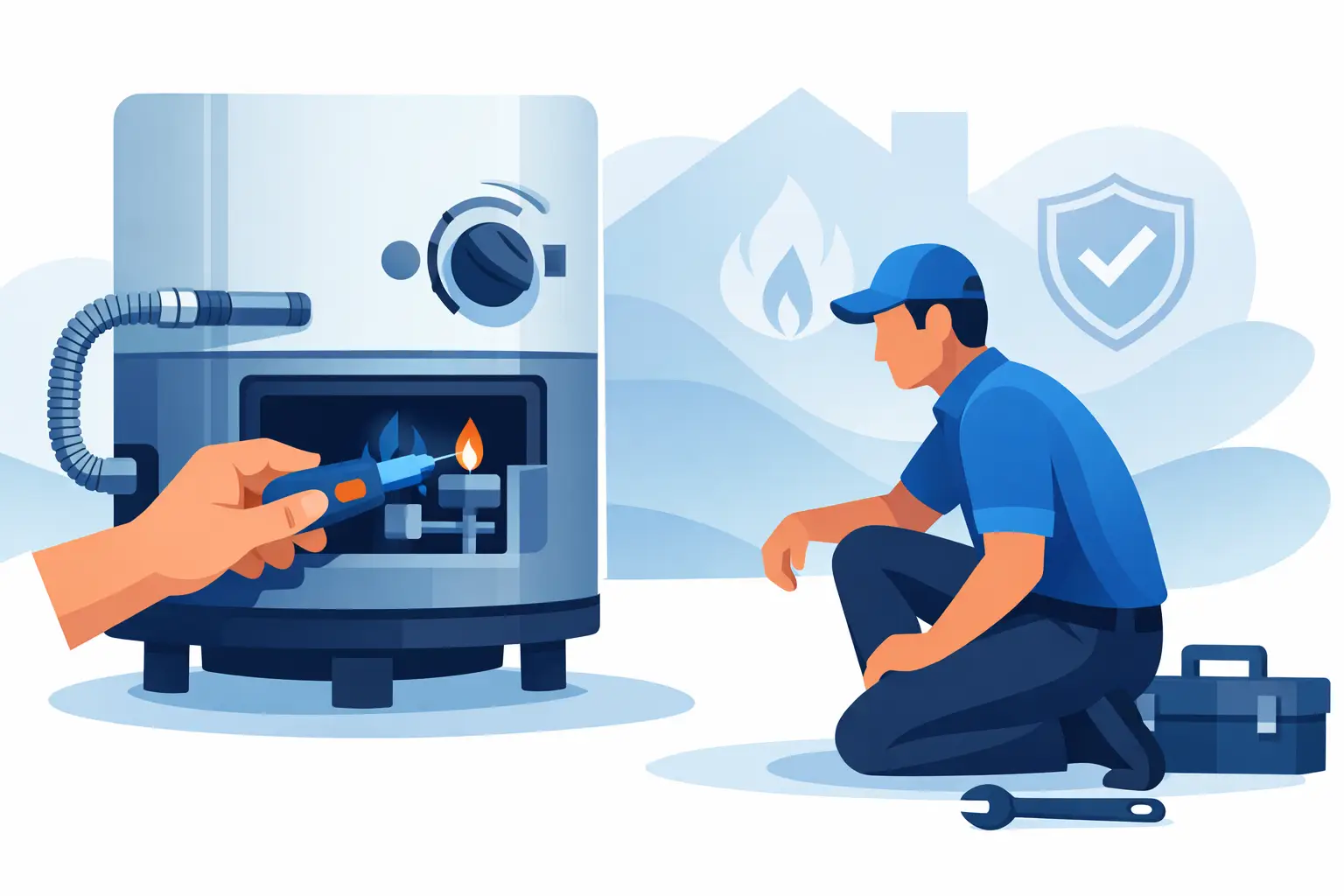
No hot water usually shows up at the worst possible time – early showers, opening the business, getting kids ready for school. If you’re trying to figure out how to relight pilot light controls on a gas water heater, the good news is that some systems can be restarted safely. The part that matters is knowing when a simple relight is appropriate and when a gas or equipment problem needs professional service.
A pilot light is a small flame that ignites the main burner on certain gas appliances. Older gas water heaters commonly use one. If that flame goes out, the burner cannot fire, and your water stays cold. Sometimes the fix is simple. Sometimes the pilot went out for a reason, and relighting it without addressing the cause just leads to the same problem again.
Before you relight a pilot light
Start with the label on your water heater. Most manufacturers print relighting instructions directly on the unit. Follow those instructions first if they differ from general advice. Water heaters vary, especially between older standing-pilot models and newer systems with electronic ignition.
Before touching the gas control, stop and check the area. If you smell gas strongly, hear hissing, or suspect a leak, do not try to relight anything. Leave the area, keep people away, and call for professional help right away. A pilot light issue is one thing. A gas leak is a different level of risk.
If there is no gas odor, make sure the area around the water heater is clear. You want good visibility and enough room to work without reaching past anything flammable. It’s also smart to give the unit a quick visual check. If you see scorch marks, soot, melted wiring, water leaking onto the burner area, or heavy corrosion, stop there. Those are signs the problem may be bigger than a blown-out pilot.
How to relight pilot light controls on a gas water heater
The exact steps depend on the model, but the general process is usually straightforward.
First, locate the gas control valve. It will usually have Off, Pilot, and On settings. Turn the control to Off and wait at least five minutes. That pause gives any residual gas time to clear from the combustion chamber. Skipping that wait is not worth the risk.
After waiting, turn the control to Pilot. On many heaters, you then press and hold the control knob or a separate pilot button to start gas flow to the pilot assembly. While holding it down, use the built-in igniter button if your unit has one. If it does not, the manufacturer’s instructions may call for a long lighter or match, but only if the unit is designed for that method.
Watch for the pilot flame to ignite. Once it lights, keep holding the button or knob for about 30 to 60 seconds. This allows the thermocouple or flame sensor to heat up and confirm that the pilot is stable. Then release the control slowly. If the flame stays lit, turn the gas valve to On. The main burner should fire when the tank calls for heat.
Put the access cover back in place if you removed one. Then wait a bit and check whether the burner cycles normally and hot water returns.
If the pilot will not stay lit
This is where many homeowners get stuck. The pilot may light for a moment, then go out as soon as you release the button. That usually means the system is not sensing flame properly or gas flow is not consistent.
A failing thermocouple is a common cause on older units. This safety component shuts off gas if it does not detect a flame. If it’s dirty, worn out, or misaligned, the pilot will not remain lit. In other cases, the pilot tube or orifice may be dirty, limiting the flame. Draft issues can also blow out a weak pilot, especially if there are airflow problems in the room.
There is also the possibility of a bad gas control valve. That is not a part to guess at. If you have already followed the lighting instructions carefully and the pilot still will not hold, it is time to stop forcing it. Repeated attempts can create unnecessary risk and usually do not solve the real issue.
When relighting a pilot light is not the right move
Not every no-hot-water problem comes from the pilot light. Sometimes the issue is the thermostat setting, sediment buildup in the tank, a failed control valve, poor venting, or a gas supply issue affecting more than one appliance.
If your water heater is newer, it may not even have a traditional standing pilot. Many current models use electronic ignition or sealed combustion systems. Trying to find and relight a pilot that does not exist wastes time and can lead to the wrong repair path.
Age matters too. If your water heater is near the end of its service life and the pilot keeps going out, you may be dealing with an appliance that is simply wearing out. At that point, repair decisions depend on the unit’s condition, the cost of parts, and how reliable you need the system to be. For a homeowner, recurring breakdowns are frustrating. For a property manager or business owner, they can quickly become a tenant or operations problem.
Safety mistakes to avoid
Most pilot relighting problems happen because someone rushes the process. The biggest mistake is ignoring the smell of gas. If gas is present, do not continue.
Another common mistake is failing to wait the full five minutes after turning the valve to Off. That waiting period exists for a reason. Gas needs time to dissipate before you try to ignite anything.
It is also a mistake to keep trying over and over when the pilot will not stay lit. One or two careful attempts following the manufacturer instructions are reasonable. Beyond that, you are no longer troubleshooting efficiently. You are increasing the chance of a bad outcome while delaying the actual repair.
Improvised tools are another issue. Use only the ignition method specified for your unit. If the heater is designed for a push-button igniter, use it. If instructions call for a long lighter, use a proper one. Do not put your hand into a tight burner space with a short flame source.
Why pilot lights go out in the first place
Sometimes a pilot goes out once and never causes trouble again. A temporary draft or interruption in gas flow can do it. But if it happens more than once, there is usually an underlying reason.
Dirt in the pilot assembly is common, especially on older equipment. Dust, lint, and debris can affect flame quality. A weak flame may not make good contact with the thermocouple. Venting problems can also disrupt combustion and lead to shutdowns. If the water heater is installed in a utility area that gets a lot of air movement, that can play a role too.
Then there are component failures. Thermocouples wear out. Gas control valves fail. Burners corrode. Water leaks can affect the lower chamber. If your system is cycling off repeatedly, the issue is no longer just how to relight pilot light controls. The issue is why the flame is not staying where it should.
When to call a professional
Call for service if you smell gas, if the pilot will not light after following the instructions, or if it lights but will not stay on. You should also call if the burner area shows signs of rust, soot, water intrusion, or damage.
For commercial properties, restaurants, offices, and multi-unit buildings, waiting too long can create bigger disruptions. Hot water is part of daily operations, not a convenience. A qualified technician can determine whether the problem is a simple pilot assembly issue, a venting concern, a gas control failure, or a sign that replacement makes more sense.
In the Reno-Sparks area, cold mornings and year-round demand on water heating systems mean a small ignition problem can turn into a real interruption fast. If you are not confident working around gas equipment, that is reason enough to make the call. Safety beats trial and error every time.
A practical rule to follow
If your water heater has a clear manufacturer procedure, no gas odor, and no visible signs of damage, a careful relight attempt may be reasonable. If anything feels off – the smell, the flame, the controls, or the condition of the unit – stop and have it checked.
Hot water should be dependable. If relighting the pilot gets you back up and running, keep an eye on the heater over the next few days. If the problem returns, treat that as a warning, not a routine inconvenience.
Leave a Reply