
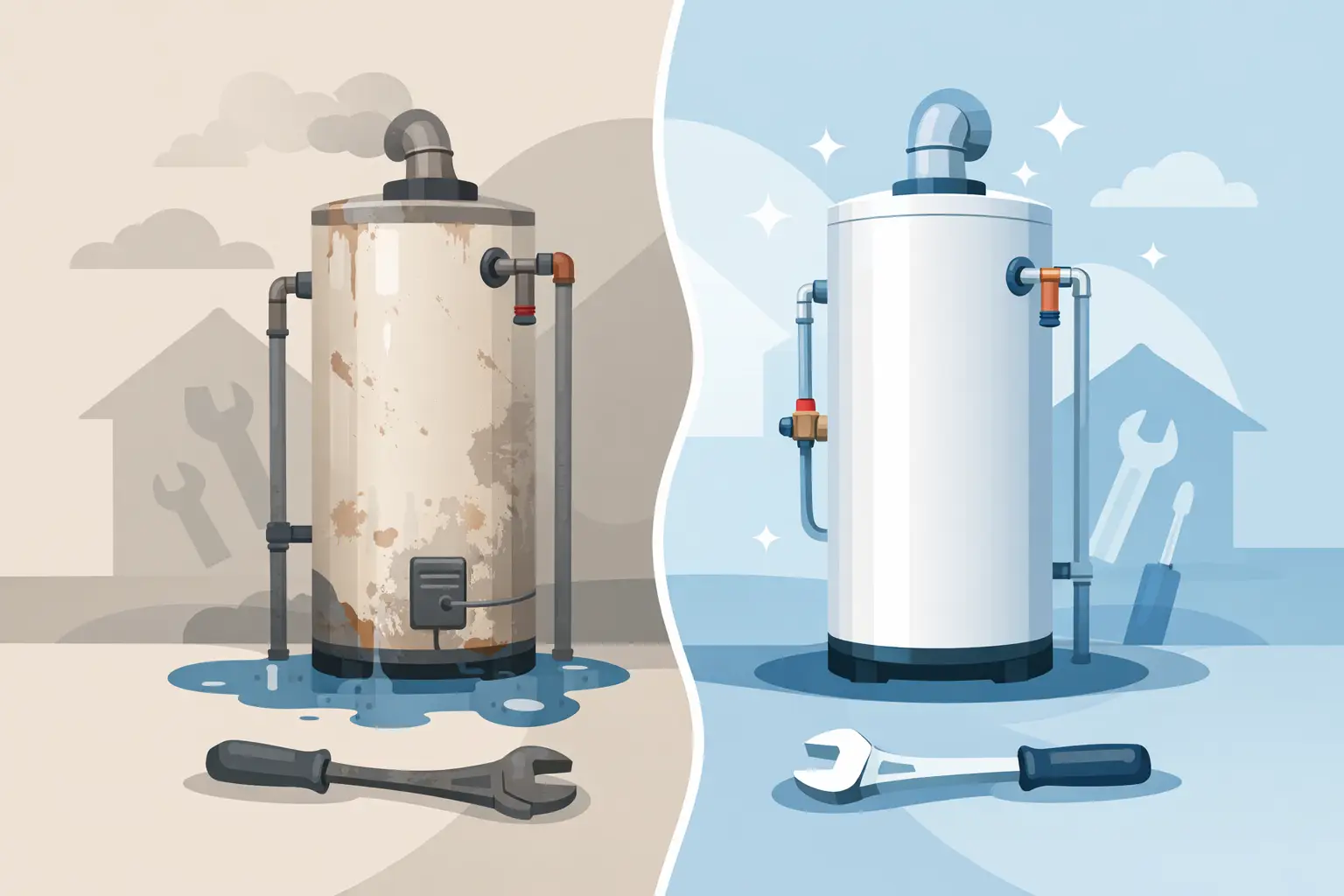
If you have ever looked at an old tank in a garage, closet, or utility room and thought, “It still works, so why replace it?” the real answer usually shows up in the water heater replacement before and after. The difference is rarely just a newer tank. It is often safer venting, cleaner piping, better hot water recovery, fewer leak risks, and a system that performs the way it should.
For homeowners, property managers, and business owners, that before-and-after change matters because water heaters are not decorative equipment. They support daily routines, tenant satisfaction, business operations, and overall plumbing reliability. When a unit is failing or outdated, you often feel the problem in small ways before you see a major breakdown.
What “before” usually looks like
Before replacement, many water heaters are still running, but not running well. The tank may be older than its expected service life, the burner or heating elements may be struggling, and the system may show signs of wear around fittings, valves, or vent connections. In some cases, the heater works just enough to delay action, which is why people put off replacement longer than they should.
A typical older setup can include slow hot water recovery, inconsistent water temperature, rumbling from sediment buildup, rust around the base, or moisture near the tank. Sometimes the warning signs are more subtle. Utility bills creep up. Tenants complain that hot water does not last. A commercial kitchen runs out of hot water during busy periods. The equipment still turns on, but performance is not dependable.
Safety can also be part of the “before” picture. Older gas water heaters may have venting issues, aging gas connections, or installations that no longer meet current code expectations. Expansion control, earthquake strapping, drain pans, shutoff access, and proper combustion air can all become part of the conversation depending on the building and the existing setup.
Water heater replacement before and after: what actually changes
The biggest mistake people make is assuming replacement means swapping one tank for another in the same spot and calling it done. A proper water heater replacement before and after often includes improvements that affect the whole installation.
First, the new unit is sized for actual demand. That sounds basic, but it matters. If the old water heater was too small, the new one can improve recovery and hot water availability right away. If it was oversized, replacement may reduce unnecessary energy use. The right answer depends on the number of fixtures, household size, usage patterns, or commercial demand.
Second, the installation itself is usually cleaner and more reliable. New shutoff valves, updated supply lines, correct venting, proper gas connections, and code-compliant discharge piping all contribute to the after result. Most people notice the hot water first, but the hidden value is often in those safety and reliability details.
Third, efficiency improves. Even standard tank replacements can perform better than aging units that are full of sediment or operating with worn components. A newer system typically heats water more consistently and wastes less energy doing it.
The comfort difference people notice right away
The after side of a replacement is often felt within the first day. Showers stay hot longer. Hot water arrives more predictably. Recovery between uses is faster. That matters in a family home, and it matters even more in properties where several people use hot water back to back.
For property managers, this can mean fewer complaints and less reactive maintenance. For business owners, it can mean smoother operations. In restaurants, salons, offices, and other facilities, hot water is not optional. It supports cleaning, sanitation, and customer-facing operations. When a water heater underperforms, the issue affects more than comfort.
That said, not every after result is dramatic in the same way. If the old unit had already failed completely, the difference feels immediate and obvious. If the old one was only limping along, the improvement may show up as consistency rather than a dramatic change. Either way, dependable performance is usually the real win.
The safety and code side of the after picture
One of the most important parts of water heater replacement before and after is the part many people never see. A professional replacement is a chance to correct issues that may have been ignored for years.
That can include replacing corroded connectors, updating vent materials or vent routing, correcting gas shutoff placement, improving seismic strapping where required, adding a proper drain pan in the right setting, or making sure the temperature and pressure relief valve discharges correctly. Those are not cosmetic upgrades. They reduce risk.
In older homes and commercial buildings, replacement can also reveal surrounding plumbing issues. A shutoff valve may no longer fully close. Supply lines may be near failure. The water pressure may be too high. Expansion control may be missing. These conditions do not always require major additional work, but they should be addressed honestly because the new heater will only perform as well as the installation around it.
Tank vs. tankless in a before-and-after comparison
Some customers asking about before and after are not just replacing old with new. They are considering a change in system type. That usually means comparing a standard tank water heater with a tankless unit.
The after result with a new tank water heater is usually familiar and straightforward. It offers stored hot water, predictable operation, and a lower upfront cost in many cases. For households and properties that want a practical replacement without major changes, this is often the right fit.
A tankless upgrade changes the experience more. It can save space and provide hot water on demand, but it may require gas line upgrades, venting changes, electrical work, or fixture-flow considerations. The right choice depends on budget, hot water demand, building layout, and long-term goals. Tankless is not automatically better for every property. A correctly selected tank system often delivers the best value when reliability and replacement speed are the priority.
What the installation process usually looks like
Before replacement day, the main questions are usually about timing, disruption, and surprises. Most straightforward replacements move quickly, but older properties and commercial setups can add complexity.
The old unit is disconnected, drained, and removed. The installer then evaluates the existing connections, venting, gas supply, shutoffs, and placement conditions before setting the new unit. If supporting components are worn or non-compliant, those are handled during the job so the final installation is safe and dependable.
After the new water heater is set, the system is connected, filled, tested, and checked for proper operation. On gas units, combustion and venting matter. On electric units, electrical connections and element function matter. In every case, the final step is making sure the heater is operating correctly under real conditions, not just turned on and left behind.
When replacement makes more sense than repair
A repair can absolutely be the right move, but not every failing water heater should be fixed. If the tank is leaking, replacement is usually the answer. If the unit is older and already having repeated issues with heating, valves, corrosion, or performance, investing in repair may only delay the next problem.
The before-and-after difference is often strongest when a property has been spending money to keep an aging unit alive. Replacing it can reduce service calls, improve energy use, and restore confidence in the system. That is especially true for rentals and commercial buildings where downtime has a cost beyond the repair invoice.
Age matters, but it is not the only factor. Condition, usage demand, installation quality, and the consequences of failure all matter too. A homeowner may tolerate a little inconvenience longer than a business can. A property manager may choose replacement sooner to avoid emergency calls and water damage risk.
What to expect after the job is done
Once the new water heater is in place, the benefits should be immediate, but there are still a few practical things to watch. Water may take a short time to fully heat on startup. You should know where the shutoff is, understand the thermostat setting, and keep the area around the unit accessible.
Over the longer term, maintenance still matters. Flushing a tank unit when appropriate, checking for early signs of leaks, and paying attention to unusual sounds can help protect the investment. Replacement is a major step forward, but every water heater performs better and lasts longer when it is installed correctly and maintained with care.
For local property owners in the Reno-Sparks area, the biggest before-and-after change is usually peace of mind. You stop wondering whether the tank will fail during a cold morning, a tenant turnover, or a busy workday. You get a system that is built to do its job safely and consistently.
A good water heater replacement should leave more than a newer appliance behind. It should leave you with reliable hot water, a safer installation, and one less critical plumbing problem waiting to happen.
Leave a Reply